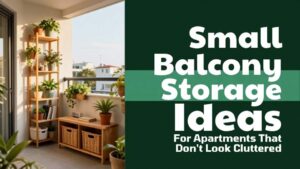

Practical balcony storage ideas for small apartments, covering weatherproof options, lease-friendly furniture, and how to store gear without losing the space to sit.
Your Smallest Room Is Outside: Organizing a Tiny Apartment Balcony
A balcony is easy to overlook as real storage space, right up until it becomes the default dumping ground for everything that doesn’t fit inside: bikes, off-season cushions, gardening supplies, and whatever seasonal gear didn’t make it into the closet. In a small apartment, that overflow problem is compounded by weather exposure, lease restrictions, and a footprint that’s often barely big enough for a chair, let alone a chair and a storage solution.
This guide covers how to store things on a small balcony without turning it into a cluttered catch-all, while keeping weather and rental rules in mind the whole way through.
Check your lease or building rules for what’s actually allowed on your balcony before buying anything. Some buildings restrict what can be visible from outside, limit weight on the structure, or ban certain types of furniture entirely, and it’s far better to find this out before a purchase than after.
Why Balcony Storage Needs a Different Approach Than Indoor Storage
Every other room in this guide deals with a controlled indoor environment. A balcony doesn’t. Rain, sun, temperature swings, and in some climates snow all affect what can safely live outside without warping, rusting, or fading within a season. Add in the fact that many apartment balconies come with restrictions on what residents can install or display, and balcony storage becomes less about maximizing capacity and more about choosing the right handful of pieces that can actually handle the conditions and the rules.
Check Restrictions Before You Buy Anything
Before considering any of the ideas below, confirm what your specific lease or building allows. Some buildings prohibit anything beyond furniture explicitly meant for outdoor seating, others restrict visible storage from the street-facing side, and many limit how much weight can be placed on the balcony structure itself. If storage needs to look like furniture rather than an obvious storage box, several of the multi-purpose options below solve that concern directly.
Start With Multi-Purpose Seating
The single most space-efficient move on a small balcony is choosing seating that also stores something. A storage bench, ottoman, or box-style seat gives you somewhere to sit while hiding cushions, gardening tools, or seasonal items inside, all within the same footprint a plain chair would take up.
Storage benches work particularly well against a wall, since the back edge doesn’t need clearance and the seat lifts to reveal a compartment underneath. A storage ottoman or pouf suits a narrower balcony where a full bench won’t fit, offering a smaller but still useful compartment for lightweight items like cushion covers or a folded blanket. A daybed or bench with built-in drawers is a bigger investment, but works well on a slightly larger balcony where you want both real seating and meaningful storage capacity in one piece.
Use the Railing Before the Floor
Railing-mounted shelves and planters use vertical space that’s otherwise completely unused, and they don’t touch the floor footprint at all. A slim shelf that clips directly onto the railing can hold small plants, a drink, or lightweight decor, while a tiered planter system frees up floor space that would otherwise go to pots sitting directly on the ground.
Check the weight rating of any railing-mounted piece carefully, since railings are generally built to handle a person leaning against them, not necessarily a heavy planter or shelf hanging off the side.
Add Wall-Mounted Shelving Where the Building Allows It
If your building permits attaching anything to the exterior wall, open shelving mounted along one side of the balcony adds real storage without using any floor space. Only weather-resistant materials belong here, since anything not built for outdoor exposure will degrade quickly with repeated rain or direct sun. A wooden panel with slotted hooks, rather than fixed shelves, offers some flexibility to rearrange what’s stored as your needs shift through the seasons.
A Slim Outdoor Cabinet for Anything That Needs Protection
For items that genuinely need protection from weather, gardening supplies, tools, cushions you don’t want to store indoors, a slim, weatherproof outdoor cabinet is one of the more effective options on a small balcony. Unlike open shelving, a closed cabinet keeps contents dry and out of direct sun, which matters for anything that would otherwise fade or degrade with repeated exposure. The trade-off is floor footprint, so measure carefully to make sure a cabinet doesn’t eat into the balcony’s usable sitting or walking space.
Door-Mounted Storage for Small Tools and Supplies
The balcony door itself is often unused as storage space. A fabric pocket organizer that hangs over the door can hold small gardening tools, plant food, or a watering can, keeping these items within reach without taking up any floor or wall space at all. This works especially well for a Juliet balcony or a very narrow space where floor storage genuinely isn’t an option.
Vertical Gardens Double as Storage Solutions
If part of your balcony clutter comes from plants and pots crowding the floor, a vertical garden system, whether a tiered planter stand or a wall-mounted pocket system, moves greenery upward instead of letting it spread across the ground. This isn’t storage in the traditional sense, but it frees up meaningful floor space that would otherwise be lost to pots, which indirectly makes room for the storage solutions covered above.
Milk Crates and Repurposed Containers for a Budget Option
Not every balcony solution needs to be purpose-built. Sturdy wooden or plastic crates can be stacked in a corner, slid under a bench, or even mounted to a wall as makeshift shelving, at a fraction of the cost of dedicated outdoor furniture. This works particularly well for a starter setup or a balcony you don’t plan to invest heavily in long-term, such as a short-term rental.
Weatherproofing Whatever You Choose
Regardless of which storage option you pick, a few habits protect it from wearing out quickly outdoors. Choose materials rated for outdoor use specifically, since indoor furniture and storage brought outside will warp or rust far faster than anything designed for the elements. A waterproof cover over a storage bench or cabinet during particularly harsh weather extends its usable life considerably. And in climates with real winters, bringing lightweight or fabric-based storage indoors during the coldest months prevents damage that a single outdoor season might otherwise cause.
Grouping Items by Type Keeps a Small Balcony From Feeling Cluttered
Even with the right storage pieces, a balcony can start to feel chaotic if items are scattered without any grouping. Keeping gardening supplies together, seating-related items like cushions and blankets together, and any seasonal decor in its own designated spot makes the space feel intentional rather than like an overflow zone from inside the apartment. This is especially useful advice for anyone using their balcony to store items purely because there’s no more room indoors, since a balcony treated as a random dumping ground quickly loses any usability as an actual outdoor space to sit and relax in.
Comparison Table: Small Balcony Storage Options
| Solution | Best For | Approx. Cost | Trade-Off |
|---|---|---|---|
| Storage bench | Seating plus hidden storage for cushions or tools | 60 to 150 dollars | Doubles as furniture, but takes up meaningful floor footprint |
| Storage ottoman or pouf | Narrow balconies needing lightweight storage | 30 to 70 dollars | Smaller capacity, but fits where a full bench won’t |
| Railing-mounted shelf | Plants, drinks, small decor without using floor space | 15 to 35 dollars | No floor footprint, but limited weight capacity |
| Wall-mounted outdoor shelving | Weather-resistant open storage | 30 to 80 dollars | Real capacity, but requires building permission to mount |
| Slim outdoor cabinet | Items needing protection from weather | 80 to 200 dollars | Best protection from the elements, but uses real floor space |
| Door-mounted pocket organizer | Small gardening tools and supplies | 15 to 25 dollars | Zero floor footprint, but limited to lighter, smaller items |
| Repurposed crates | Budget setups, short-term rentals | Free to 15 dollars each | Lowest cost, but less durable and less weatherproof than purpose-built options |
Keeping the Balcony Usable, Not Just Storage-Packed
The whole point of a balcony is to give you an outdoor space to actually use, and it’s easy for storage to slowly take over that function if left unchecked. Before adding a new storage piece, check that there’s still enough clear floor space to sit comfortably, since a balcony that’s been fully converted into a storage unit stops serving its original purpose. A seasonal review, checking what’s actually being used versus what’s just been sitting there since last year, helps keep the space balanced between function and the outdoor spot it was meant to be.