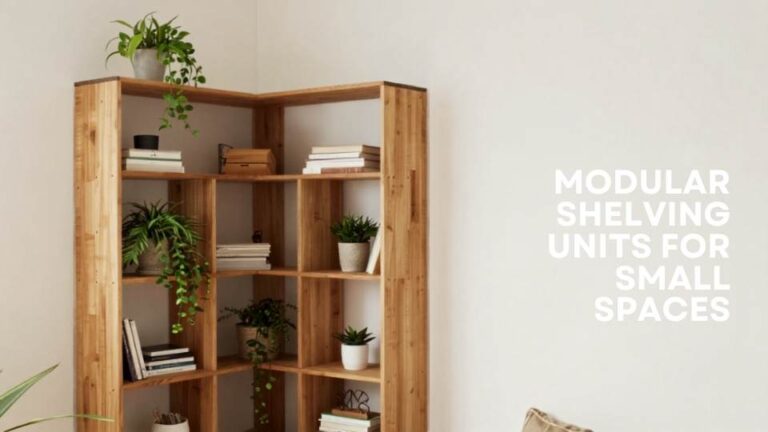

A Practical dorm room organization ideas for small and shared spaces, covering closets, under-bed storage, and desk zones. Includes a comparison table and move-in tips.
Living Large in 130 Square Feet: Organizing a Dorm Room That Actually Works
A dorm room asks a single small box to be a bedroom, a closet, a study space, and often a kitchenette all at once, usually shared with another person doing the exact same thing. Unlike an apartment, there’s no flexibility to knock down a wall or add a built-in, and most schools have strict rules against drilling or making permanent changes. Every inch has to be planned before move-in day, not figured out afterward.
This guide covers how to organize a dorm room using the tools that actually hold up under those restrictions: no-drill storage, smart use of vertical space, and a system for sharing a tiny room with a roommate without it turning into a daily negotiation.
The one thing to do today, before you even start packing: find out the exact dimensions of your dorm room’s closet, desk, and any built-in drawers from your school’s housing office or a room tour video. Buying storage before knowing these measurements is the single most common and avoidable mistake in dorm move-in planning.
Pack With a Filter, Not Just a List
The instinct before move-in is to bring everything that might possibly be useful. In a room this size, that instinct works against you. Before packing, sort potential items into two piles: definitely needed and maybe needed. For anything in the maybe pile, ask whether it’s worth the space it will take up in a room with almost no spare square footage. Items that don’t clearly earn their spot are usually better left at home, especially anything duplicated by a roommate who’s likely bringing something similar.
Sort by Category Before You Even Touch a Bin
Once you know roughly what’s coming with you, group it into broad categories: clothing, books and papers, toiletries, bedding, tech essentials, and any sports or hobby equipment. Seeing the volume in each category before buying storage tells you where you actually need the most capacity, rather than guessing and ending up with mismatched bins that don’t fit what you brought.
Go Vertical Before You Run Out of Floor Space
Dorm rooms typically come furnished with a bed, dresser, and desk, leaving very little floor space for anything additional. Wall shelves, hooks, and hanging organizers add real storage without eating into that limited floor footprint. If your school allows it, mounted wall shelves work well for books, photos, or décor. Where drilling isn’t permitted, adhesive-mounted hooks and slim over-the-door organizers cover most of the same need without violating housing rules.
Use the Bed as Storage, Not Just a Place to Sleep
Most dorm beds can be raised on risers or lofted entirely, and this single change often creates more usable storage than anything else in the room. Bed risers open up space underneath for bins, drawers, or a small set of rolling storage boxes. If your bed frame allows for a full loft configuration, raising it high enough to fit a desk or dresser underneath essentially doubles the usable floor space in the room. For beds that can’t be raised, flat under-bed bins still make use of whatever clearance is available, and a bed skirt hides the storage from view if a tidy look matters to you.
For above the bed: shelves designed specifically to fit over a twin dorm bed frame add another storage tier without needing floor space, useful for books, photos, or anything you want visible but out of the way.
Set Up a Designated Study Zone at the Desk
With a roommate and a bed a few feet away, it’s easy for a desk to become a catch-all for whatever doesn’t have another spot. Keeping the desk reserved for study and daily essentials only, using drawer organizers for pens and small supplies and binder clips to manage charging cables, keeps it functional rather than another source of clutter. A small charging station on the desk, with a designated spot for each device’s cord, prevents the tangle that tends to build up fast in a shared, tiny room.
Maximize a Tiny Closet With the Right Hangers and Bins
Dorm closets are often barely wide enough for a week’s worth of clothes, let alone a full semester’s wardrobe. Slim, non-slip hangers take up meaningfully less rod space than standard hangers, letting you fit noticeably more clothing in the same width. Small bins on the closet floor keep shoes contained and off the ground, and a hanging shelf organizer adds several extra tiers of storage within the closet’s existing footprint, without needing any additional floor space.
Consider a Capsule Approach for Seasonal Clothing
If you’re moving to a climate with a real change of seasons, packing your entire wardrobe for the whole year at once will overwhelm a dorm closet fast. A smaller, current-season wardrobe kept in the closet, with off-season items stored separately, whether at home, in a bin under the bed, or in a vacuum storage bag, keeps the closet from being asked to hold more than it reasonably can. Vacuum bags work well for bulky items like winter coats and sweaters, though it’s worth testing this approach with just one item first, since not everyone finds the compression and re-inflation process worth the extra step.
Create a Small Kitchen Zone If Space and Rules Allow
Many dorms permit a small fridge, a coffee maker, or a few kitchen basics, even without a full kitchen. A rolling cart designated specifically as a mini kitchen area keeps snacks, a coffee maker, and basic utensils contained to one spot rather than spread across a desk or dresser. Removing snacks from bulky original packaging and transferring them into stackable containers saves real space in a cart or bin that’s already working with very little room.
Splitting the Room Fairly With a Roommate
Sharing a dorm room means dividing not just space, but also responsibility for keeping shared areas usable. A clear, even split of closet space, desk area, and any shared shelving, decided early rather than negotiated after clutter has already built up, prevents most of the daily friction that comes from one person’s belongings creeping into the other’s space. A shared rolling cart or set of labeled bins for snacks and school supplies both people access keeps communal items from becoming a source of “whose job is it to restock this” arguments.
Use Rolling Storage for Anything That Needs to Move
A dorm room’s fixed furniture usually can’t be rearranged much, but rolling carts and bins add flexibility that fixed shelving can’t. A cart can serve as a nightstand, a kitchen station, or extra storage depending on the day’s needs, and it can be tucked out of the way entirely when floor space is needed for something else, like a guest chair or extra study space during exams.
What to Skip Bringing Entirely
A few categories are almost always better left at home. Bulky furniture beyond what the room already provides rarely fits, and buying it only to discover it doesn’t work in the space wastes both money and moving effort. Duplicate appliances, coordinating with a roommate ahead of time on who brings the mini fridge, the coffee maker, or the fan, avoids two of the same item competing for the same tiny footprint. And decor that requires permanent wall damage is rarely worth the risk of losing part of a housing deposit over.
Comparison Table: Dorm Room Storage Options
| Solution | Best For | Approx. Cost | Trade-Off |
|---|---|---|---|
| Bed risers | Adding under-bed storage clearance | 15 to 30 dollars | Cheap and effective, but only works with compatible bed frames |
| Over-the-bed shelving | Storage above a twin dorm bed | 30 to 70 dollars | Adds a full tier of storage, but needs enough ceiling clearance |
| Slim non-slip hangers | Maximizing a narrow dorm closet | 10 to 20 dollars for a set | Meaningful space savings, but a small upfront cost for a full wardrobe swap |
| Rolling storage cart | Kitchen zone, nightstand, or flexible extra storage | 30 to 60 dollars | Highly flexible, but takes up floor space when not tucked away |
| Over-the-door organizer | Toiletries, school supplies, small accessories | 15 to 25 dollars | No floor footprint, but limited to smaller, lighter items |
| Storage ottoman | Extra seating plus hidden storage for blankets or gear | 40 to 90 dollars | Doubles as furniture, but takes up floor space a dorm room can rarely spare |
| Vacuum storage bags | Off-season clothing in a small closet | 15 to 25 dollars for a set | Frees real closet space, but not ideal for daily-use items |
Keeping the System Working Through the Semester
A dorm room organization system set up perfectly during move-in weekend can fall apart fast once classes start and free time shrinks. A short weekly reset, returning items to their designated spot and doing a quick declutter of anything that’s accumulated on the desk or floor, keeps the room functional through a busy semester rather than requiring a full reorganization every few months.