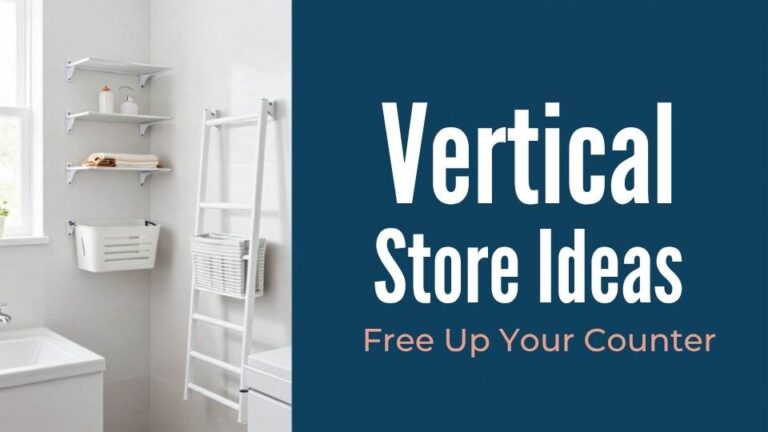

Here is a step-by-step practical vertical storage ideas for small kitchens, from pegboards to magnetic strips. Includes a comparison table and honest trade-offs for renters and owners.
Look Up: Turning Bare Kitchen Walls Into Real Storage
A small kitchen fills up fast. Countertops disappear under small appliances, cabinets get crammed with mismatched containers, and there’s rarely enough room left for the one thing that actually matters: space to cook. Meanwhile, the walls above the counters, around the stove, and beside the fridge usually sit completely bare, holding nothing at all.
Going vertical is one of the most effective ways to add real storage to a small kitchen without a renovation. This guide covers the wall-based storage options that actually make a difference, what each one costs, and where each one falls short, so you can pick what fits your kitchen instead of copying a layout that works for someone else’s.
The one thing to do today: look at the wall space directly above your counter, between the counter and the upper cabinets. This backsplash-height strip is almost always empty, and it’s usually the easiest place in the whole kitchen to add a shelf, rail, or magnetic strip without touching anything structural.
Why Vertical Storage Matters More in a Kitchen Than Almost Anywhere Else
Kitchens ask a lot of a small footprint. Cookware, dishes, small appliances, spices, and everyday tools all need a home, and a kitchen that relies only on cabinets and countertops runs out of room fast. Wall space above the counters, beside the stove, and even inside cabinet doors is capacity that’s already there, waiting to be used, and it doesn’t cost anything in floor space, which is usually the tightest resource in a small kitchen to begin with.
Open Shelving for Everyday Dishes
Floating shelves mounted where upper cabinets might normally go hold plates, bowls, and mugs while keeping them visible and easy to reach. Open shelving tends to make a small kitchen feel lighter than a wall of closed cabinets, since it doesn’t visually block off the wall the way solid cabinet doors do.
The trade-off is that open shelves need to stay reasonably tidy, since everything on them is on display. They also collect more dust than closed cabinets, so items used daily do better here than pieces you only pull out occasionally.
A Rail System for Everyday Cooking Tools
A wall-mounted rail with S-hooks turns a strip of blank wall into hanging storage for spatulas, whisks, oven mitts, and other frequently used tools. This keeps them out of a crowded utensil drawer and within easy reach while cooking, which matters more than it sounds, since digging through a jammed drawer mid-recipe is one of the more common small-kitchen frustrations.
Install the rail at a height where hanging items don’t interfere with counter workspace, usually just below the upper cabinets or along an open stretch of backsplash.
A Magnetic Strip for Knives
A magnetic knife strip mounted on the wall frees up an entire knife block’s worth of counter space, while keeping blades visible and easy to grab. It also tends to be safer than tossing knives loose into a drawer, since each blade sits separately rather than sliding around next to other utensils.
This works especially well next to the main prep area, so the knives you use most are within arm’s reach exactly where you need them.
A Pot Rack for Cookware That Eats Cabinet Space
Pots and pans take up a disproportionate amount of cabinet space relative to how often any single one gets used. A ceiling-mounted or wall-mounted pot rack moves this entire category out of the cabinets entirely, freeing up a meaningful amount of storage for everything else.
The trade-off is visual. A pot rack puts cookware on permanent display, which works well in a kitchen with a cohesive look to the pots and pans themselves, but can feel cluttered if the collection is a mismatched assortment of items.
Wall-Mounted Jars for Dry Goods
Clear jars mounted to the wall with metal clamps or a rail system move rice, pasta, or baking staples out of the pantry and onto the wall, freeing up shelf space while adding a clean, organized look. This works best for items used often enough that the exposed storage stays functional rather than becoming another dusty display.
Slim Shelving in Narrow Gaps
Most small kitchens have at least one narrow gap, between the fridge and the wall, beside a cabinet, or next to the stove, that’s too tight for standard furniture. A slim, tall shelving unit built specifically for these gaps can hold canned goods, spices, or cutting boards in a space that would otherwise sit completely empty.
The Inside of Cabinet Doors
The inside of cabinet doors is one of the most overlooked storage zones in any kitchen. Slim adhesive-mounted racks attached there can hold cutting boards, pot lids, cleaning supplies, or spray bottles, all without taking up any of the actual shelf space inside the cabinet.
A Fold-Down Shelf for Extra Prep Space
In a kitchen too small for a full island or cart, a hinged, fold-down shelf mounted to the wall provides extra prep space exactly when it’s needed and disappears against the wall the rest of the time. This is a strong option for kitchens where counter space, not just storage, is the real bottleneck.
Under-Cabinet Space for Items You Reach for Constantly
The strip of wall directly under the upper cabinets, above the counter, is prime real estate for small racks and hooks holding mugs, oven mitts, or small utensils. Since this space sits at eye level and within easy reach, it works best for items you use every single day rather than anything you only need occasionally.
Balancing Open Storage With a Clutter-Free Look
Vertical storage only helps a small kitchen if it doesn’t end up looking more chaotic than the cabinets it’s replacing. A kitchen with wall shelving, a pot rack, a knife strip, and hanging jars all crammed onto the same section of wall will feel busier, not calmer. Pick one or two vertical solutions per wall, keep colors and materials reasonably consistent, and leave some blank wall space so the kitchen still feels open rather than covered edge to edge.
What to Skip in a Small Kitchen
Not every vertical idea deserves a spot in every kitchen. Full wall-to-wall pegboards can look busy fast if they’re not curated, and heavy, dark upper shelving units can make a small kitchen feel more closed in rather than more open. Lighter, simpler wall storage generally holds up better in a compact space than anything visually bulky.
Comparison Table: Vertical Kitchen Storage Options
| Option | Best For | Approx. Cost | Trade-Off |
|---|---|---|---|
| Floating shelves | Everyday dishes, mugs, glassware | 20 to 50 dollars per shelf | Frees cabinet space, but items stay visible and need regular tidying |
| Wall-mounted rail with hooks | Cooking utensils, oven mitts | 15 to 35 dollars | Keeps tools within reach, but needs a clear stretch of wall near the stove |
| Magnetic knife strip | Knives, small metal tools | 15 to 30 dollars | Frees counter space, but requires stud mounting for safety |
| Pot rack (wall or ceiling) | Pots, pans, heavier cookware | 30 to 80 dollars | Frees significant cabinet space, but puts cookware on permanent display |
| Wall-mounted jars | Rice, pasta, baking staples | 20 to 40 dollars for a set | Clean, visible storage, but only suited to frequently used dry goods |
| Slim narrow-gap shelving | Awkward gaps beside appliances | 40 to 90 dollars | Uses otherwise wasted space, but limited to items that fit a narrow footprint |
| Fold-down wall shelf | Extra prep space in tight kitchens | 40 to 100 dollars | Solves a counter space problem, not just storage, but needs sturdy wall mounting |
Keeping It Up Over Time
Vertical kitchen storage tends to drift toward clutter faster than cabinets, simply because everything is visible. A quick weekly reset, wiping down open shelves and returning anything that’s landed in the wrong spot, keeps the system looking intentional instead of chaotic. It also helps to revisit the setup every few months, since kitchen habits shift, and a rail or shelf that made sense a year ago might not match how you’re cooking now.