
Organized on a Real Budget: What to Buy, What to Skip, What You Already Own
Meta Title: Meta Description: Practical, low-cost home organization ideas, including what to repurpose, where to shop cheap, and which storage products are worth the money.
Home organization can turn into an expensive project fast. A single trip to a specialty storage store can run past a hundred dollars before you’ve even finished one closet, and it’s easy to walk out with matching bins that look great but don’t actually solve the clutter problem underneath.
The truth is, most of what makes a home organized has very little to do with money. It has to do with sorting items by category, giving everything a specific spot, and only spending on containers once you know exactly what you need. This guide covers where the real savings are, what’s worth buying, and what you can solve with things you already own.
The one thing to do today: before spending a cent, walk through your home and list every container you already own that isn’t currently being used for storage: shoeboxes, glass jars, baskets, old drawers from furniture you’re replacing. Most households already have three or four usable containers sitting around unnoticed.
Declutter Before You Spend Anything
The single biggest way to save money on organization is to reduce what you own before buying storage for it. Fewer items means fewer containers, smaller shelving needs, and less pressure to buy a bigger solution than you actually need. Go through one problem area, remove anything broken, expired, or unused in the past year, and only then think about what containers the remaining items actually require.
This step alone often removes the need for half the bins people assume they need to buy.
Shop the House Before You Shop a Store
Before buying anything new, look at what’s already sitting around unused. A few examples that work surprisingly well:
- Shoeboxes make solid drawer dividers for small items like cables, batteries, or office supplies.
- Glass jars from sauce, jam, or nut butter work well for pantry staples, bathroom cotton balls, or craft supplies once cleaned.
- Old dressers or side tables headed for donation can become closet or garage storage instead, if there’s room for the extra footprint.
- Egg cartons are a near-perfect size for separating small hardware like screws, buttons, or beads in a drawer.
None of this needs to look polished. Items tucked inside a closet or drawer don’t need to match anything, since no one sees them but you.
Know Where to Shop When You Do Need to Buy
When repurposing isn’t enough, a handful of low-cost sources cover most organization needs without the markup of specialty stores:
- Dollar stores for small bins, drawer dividers, and hooks
- Discount home retailers for slightly larger storage items like shelving or baskets
- Secondhand marketplaces and thrift stores for furniture with built-in storage, like dressers or bookshelves
- Local buy-nothing or community groups, where people often give away containers and shelving for free
Specialty organization stores aren’t a bad source, but they’re best saved for the one or two items where fit and durability really matter, like a closet system or a specific shelf insert, rather than for general bins.
Spend on the Things That Actually Get Used Daily
Not every part of a home needs the same level of investment. Areas used constantly, an entryway, a kitchen counter, a bathroom cabinet, are worth spending a bit more on, since a sturdier bin or shelf will hold up to daily use far longer than a bargain version. Areas used rarely, like a garage shelf for holiday decorations, are a better fit for the cheapest option available, since durability matters less when something is only handled once or twice a year.
Low-Cost Fixes by Room
Kitchen. A magnetic strip mounted inside a cabinet door holds spice jars with metal lids, freeing up a whole shelf. Repurposed glass jars work well for bulk pantry items like rice, oats, or pasta.
Bathroom. A tension rod under the sink adds a second tier for spray bottles, hung by their necks. An over-the-door organizer holds toiletries without needing any new shelving.
Kids’ rooms. Repurposed baskets or bins, even mismatched ones, separate toys by type well enough for daily use. A cup or small jar on a shelf keeps crayons and markers from scattering.
Entryway. A basket by the door for shoes solves the pile-up problem for less than the cost of a bench with built-in storage. Cheap hooks handle keys and bags without any drilling required.
Home office. An old mug or repurposed can holds pens and scissors just as well as a store-bought organizer. A simple accordion folder handles receipts and paperwork for a fraction of the cost of a filing cabinet.
When It’s Worth Spending More
A few categories are genuinely worth a bigger investment, since a cheaper version often fails or needs replacing within a year:
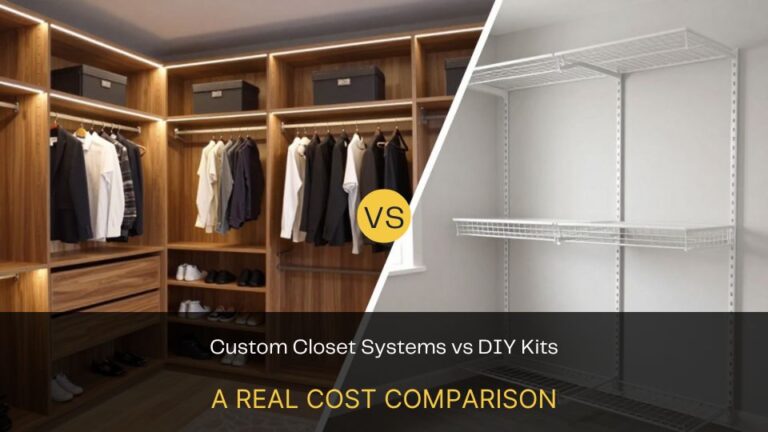
- Closet systems, since a well-fitted setup lasts for years and makes better use of the space than adjustable, lower-cost versions
- Frequently opened bins and baskets, since flimsy materials wear out fast with daily handling
- Anything wall-mounted holding real weight, since a cheap bracket or adhesive strip failing can damage both the wall and whatever it was holding
Comparison Table: Budget vs. Investment Organization Choices
| Item | Budget Option | Approx. Cost | When to Invest Instead |
|---|---|---|---|
| Drawer dividers | Repurposed shoeboxes or cut cardboard | Free to 5 dollars | When a drawer holds delicate or frequently used items |
| Pantry containers | Repurposed glass jars | Free | When you want uniform stacking across a full pantry |
| Closet shelving | Tension rods, freestanding wire shelves | 15 to 40 dollars | When a closet is a permanent, heavily used space worth a custom fit |
| Bathroom storage | Dollar store bins and hooks | 5 to 15 dollars | When storage sits somewhere humid or handles daily wear |
| Kids’ toy bins | Repurposed baskets, mismatched containers | Free to 10 dollars | When bins need to be lightweight and durable for daily use by a child |
Making a Budget Setup Last
A cheap organization system falls apart just as easily as an expensive one if it isn’t maintained. A five-minute reset at the end of each day, returning items to their assigned spot, keeps a budget setup working just as well as a costly one. The real cost-saver isn’t the price of the bin. It’s making sure the system gets used consistently enough that you never need to redo it from scratch.