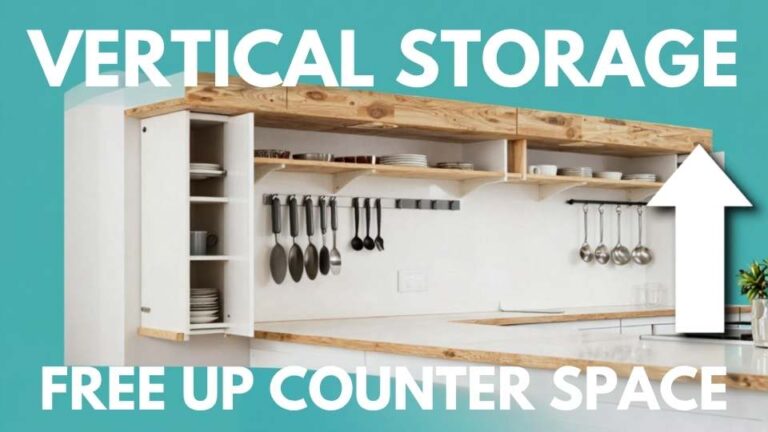

In this guide you will learn a Practical vertical storage ideas for small bathrooms, from over-the-toilet shelving to shower tension poles. Includes trade-offs and a comparison table.
The Space Above the Toilet Is Prime Real Estate: Vertical Storage for Small Bathrooms
A small bathroom has almost no floor space to work with, and the fixtures that are there, the sink, the toilet, the tub, take up most of what little room exists. That leaves the walls as the only real opportunity for extra storage, yet most small bathrooms leave that space completely empty.
This guide covers the vertical storage options that actually make a difference in a small bathroom, along with what each one costs and where it falls short.
Look at the wall space directly above your toilet. In most bathrooms, this is the single largest untouched storage opportunity in the whole room, and it’s usually available whether you own or rent.
Why Vertical Storage Matters More in a Bathroom Than Anywhere Else
Bathrooms are unique in how little floor space they offer relative to how many small items need a home: toiletries, medications, towels, cleaning supplies, and hair tools all compete for a single vanity and maybe one small cabinet. Going vertical isn’t optional in a small bathroom the way it might be in a bedroom. It’s usually the only real option left once the floor is accounted for.
Claim the Space Above the Toilet First
The wall directly above a toilet tank is one of the most reliably empty spaces in any bathroom, and it’s rated for real storage capacity since nothing else competes for that spot. A few tiers of open shelving there can hold towels, toilet paper, and display items without touching the floor at all.
For renters, a freestanding over-the-toilet unit (sometimes called an etagere) straddles the toilet without any wall mounting, which makes it one of the easiest vertical wins in a rental bathroom.
Use Floating Shelves Near the Mirror or Vanity
A narrow floating shelf mounted beside or above the mirror can hold daily items like a toothbrush holder, hand soap, or skincare products, keeping the vanity counter clearer. Since bathrooms deal with humidity, stick to moisture-resistant materials like sealed wood, metal, or acrylic rather than untreated wood, which can warp over time.
Mount shelves into wall studs wherever possible, especially if you plan to store anything glass or heavier than a few toiletries.
Add a Tension Pole Inside the Shower
A tension pole that extends between the shower floor and ceiling is one of the best no-drill options for shower storage. It holds several adjustable baskets along its length, giving each person in the household their own section for shampoo, conditioner, and body wash, without a single bottle sitting on the shower floor.
This is especially useful in shared bathrooms, where floor-standing caddies tend to become one crowded, tipping-over mess.
Use the Inside of Cabinet Doors
The inside of a vanity cabinet door is almost always unused space. Small adhesive-mounted racks or hooks attached there can hold hair tools, cleaning brushes, or small bottles, all without taking up any shelf space inside the cabinet itself.
Go Deeper With a Recessed or Deep Medicine Cabinet
Standard medicine cabinets are often only a few inches deep, which limits what fits inside. Swapping to a deeper cabinet, whether recessed into the wall or surface-mounted, can meaningfully increase storage without expanding the cabinet’s footprint on the wall. Recessed versions work well in bathrooms where the wall cavity allows for it, while surface-mounted versions are the easier install if the wall behind can’t be modified.
Try a Slim Vertical Cabinet in an Awkward Gap
Small bathrooms often have an odd gap between the vanity and the wall, or between the toilet and the tub, that’s too narrow for standard furniture. A slim vertical cabinet, sometimes as narrow as six to twelve inches wide, fits into these gaps and adds real storage in a spot that would otherwise be wasted entirely.
Use a Ladder Shelf for Towels
A ladder-style shelf leaned against an open wall can hold rolled towels on its rungs, plus a small shelf or basket at the top for additional items. It takes up very little floor space and requires no mounting at all, making it one of the more flexible options for a small or rented bathroom.
Keep the Counter to Daily Essentials Only
Vertical storage only helps if the counter doesn’t immediately refill with clutter. Limit what stays on the counter to items used every single day, like a toothbrush holder and hand soap, and move everything else, backup supplies, extra products, hair tools, to one of the vertical spots above.
Comparison Table: Vertical Storage Options for Small Bathrooms
| Option | Best For | Approx. Cost | Trade-Off |
|---|---|---|---|
| Over-the-toilet shelving | General storage above the toilet tank | 30 to 80 dollars | Big storage gain, but freestanding units can feel bulky in a very narrow bathroom |
| Floating shelves | Daily items near the vanity or mirror | 15 to 40 dollars | Needs stud mounting for anything heavier than light toiletries |
| Shower tension pole | Shared showers, multiple users | 20 to 40 dollars | No drilling needed, but adds visual clutter inside the shower itself |
| Deep medicine cabinet | Replacing a shallow existing cabinet | 60 to 150 dollars | Bigger investment and may need a professional install if recessed |
| Slim vertical cabinet | Awkward gaps between fixtures | 40 to 100 dollars | Limited to narrow items due to the shallow width |
| Ladder shelf | Towel storage, rentals | 30 to 70 dollars | Not secured to the wall, so less stable than mounted options |
Matching the Option to Your Bathroom
Not every bathroom needs all of these at once. A rental with limited wall options might rely mostly on a freestanding over-the-toilet unit and a ladder shelf, while an owned home with more flexibility can go further with a deep medicine cabinet or built-in floating shelves. Start with whichever wall space in your bathroom is currently emptiest, since that’s almost always the fastest, easiest win.