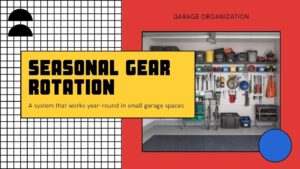

Swap, Don’t Stack: A Seasonal Rotation System for a Small Garage
A feasible rotation system for seasonal garage gear, covering how to swap items by season without letting a small garage overflow. Includes a comparison table.
A small garage can hold a surprising amount, as long as it isn’t trying to hold everything at once. The real problem with most small garages isn’t a lack of storage. It’s that every season’s gear, the mower and gardening tools, the beach chairs and bikes, the snow shovels and holiday decorations, all sits out at the same time, competing for the same limited floor and shelf space year-round.
A rotation system solves this by accepting a simple idea: you don’t need year-round access to gear you only use for a few months. This guide covers how to set up a rotation system that actually gets used, rather than one that looks good on paper and falls apart by the second season.
The one thing to do today: walk through your garage and identify every item that’s currently out and accessible but hasn’t been touched in the last two months. That’s usually last season’s gear that should have already rotated out, and moving it now is the fastest way to free up real space before setting up a full system.
Why Rotation Beats Just Buying More Storage
The instinct in a crowded garage is often to add more shelving or bigger bins. That helps to a point, but it doesn’t solve the underlying issue: too many categories of gear competing for the same prime, easy-to-reach space at the same time. A rotation system instead treats the garage as having two tiers, current-season items that stay accessible, and off-season items that move to less convenient storage until they’re needed again. This single shift usually frees up more usable space than any amount of additional shelving would on its own.
Start by Sorting Everything Into Seasonal Categories
Before setting up any physical system, go through everything currently in the garage and group it by when it actually gets used:
- Spring and summer — lawn equipment, gardening tools, patio furniture cushions, pool gear, bikes, camping equipment
- Fall and winter — snow shovels, ice melt, holiday decorations, winter sports gear, space heaters
- Year-round — tools used regularly regardless of season, vehicle supplies, everyday household overflow
This sort does double duty. It shows you exactly what belongs in each rotation, and it usually surfaces duplicate or unused items you didn’t realize were taking up space, since seeing an entire category laid out at once makes it easier to spot what’s genuinely still in use.
Set Up Two Zones: Accessible and Overhead
Once everything is sorted, the physical system comes down to two tiers of space.
The accessible zone covers eye-level shelving, wall hooks, and anything within easy reach without a ladder. This is reserved for whatever season is currently active, plus your year-round items. The overhead or high-shelf zone covers ceiling racks, the top shelf of a shelving unit, or any spot that requires a step stool to reach. This is where off-season gear lives until its turn comes back around.
The key habit that makes this work is genuinely swapping what’s in each zone as the seasons change, rather than just adding new items to the accessible zone without removing what’s no longer needed there. A garage that only adds and never rotates out ends up just as crowded as one with no system at all.
Choose Storage That Makes Swapping Easy
The type of container you use directly affects whether the rotation actually happens on schedule or gets postponed indefinitely because moving things is a hassle.
Uniform, stackable bins make the whole process faster, since matching sizes stack securely both in the accessible zone and in overhead storage, without needing to reshuffle everything each time. Clear or well-labeled bins let you identify contents without opening every container, which matters most for the overhead zone, where digging through a bin on a high shelf is far more inconvenient than at eye level. Bins with secure, locking lids hold up better for overhead storage specifically, since anything stored above head height needs to stay closed and stable without the risk of lids popping open.
Overhead Racks Are Worth the Investment for True Off-Season Gear
Ceiling-mounted or high-wall racks are one of the most effective tools for a rotation system, since they remove off-season bulk completely from the working floor space of the garage. A basic fixed rack works well for lighter items that don’t need frequent access, while a retractable, pulley-based system, which lowers to a reachable height and returns to the ceiling afterward, is worth the higher cost if you’re rotating heavier bins several times a year and want to avoid ladder trips each time.
Whichever type you choose, check the weight rating carefully and mount into ceiling joists rather than drywall alone, since overhead storage failures are both a safety risk and a real cause of damage to whatever’s stored below.
Build a Simple Two-Date Rotation Schedule
A rotation system only works if it happens on a predictable schedule rather than whenever someone gets around to it. Pick two fixed dates a year, ideally tied to an obvious marker like the first warm weekend of spring and the first cold snap of fall, and treat those as non-negotiable swap days. On each date, move the outgoing season’s gear to overhead storage and bring the incoming season’s items down to the accessible zone.
Some households find a quarterly schedule works better if they have distinct spring, summer, fall, and winter categories rather than just two broad seasons, particularly if gardening supplies, summer recreation gear, and holiday decorations all need their own separate swap points throughout the year.
Label With Both Season and Contents
A bin labeled simply “winter” still requires opening it to remember exactly what’s inside months later. A more useful label includes both the season and a specific contents list, such as “winter: shovels, ice melt, extension cords” rather than just “winter.” This small difference saves real time during the rotation itself, since you can identify at a glance which bin needs to come down without opening several to find the right one.
Keep a Simple Inventory List
For garages with a lot of rotating categories, a short written or digital inventory list, noting which bin holds what and roughly where it’s stored, prevents both the frustration of searching for a specific item and the tendency to buy a duplicate simply because the original couldn’t be found in time. This doesn’t need to be elaborate. A simple note on your phone listing bin numbers or labels alongside their general contents is usually enough to make a real difference.
Declutter at Every Swap, Not Just Once a Year
Each rotation date is a natural checkpoint to ask whether everything going back into storage still deserves a spot. Gear that wasn’t used at all during its most recent season in the accessible zone is a strong candidate for donation rather than automatically rotating back into overhead storage for another year. Building this small decluttering habit into every swap keeps the overall volume of stored gear from slowly creeping upward year after year.
Comparison Table: Garage Rotation Storage Options
| Storage Type | Best For | Approx. Cost | Trade-Off |
|---|---|---|---|
| Fixed overhead rack | Lighter off-season items accessed only once or twice a year | 40 to 100 dollars | Affordable, but requires a ladder to access |
| Retractable overhead lift | Heavier bins rotated multiple times a year | 150 to 400 dollars | Easier and safer access, but a bigger upfront investment |
| Stackable uniform bins | Any rotation system needing consistent sizing | 10 to 20 dollars each | Efficient stacking, but requires committing to one size range |
| Wall-mounted slatwall or pegboard zones | Smaller seasonal tools and gear | 40 to 120 dollars for a section | Keeps items visible and organized, but limited to lighter items |
| Simple labeled cardboard boxes | Budget-conscious, infrequent rotation | 5 to 15 dollars each | Lowest cost, but less durable for long-term or humid garage storage |
Getting the Whole Household on Board
A rotation system tends to fall apart fastest when only one person in the household understands or maintains it. Involving everyone in at least one seasonal swap, even briefly, helps the system stick, since it becomes a shared routine rather than one person’s ongoing project. Clear labeling and a simple, visible zone map help here too, since anyone in the household can find or return an item correctly without needing to ask where something belongs.