
A clear, practical framework for decluttering your home fast. Learn the methods that work, how to pick items to keep or toss, and how to make it stick.
How to Declutter Your Home Fast: A Framework That Actually Works
Most people don’t fail at decluttering because they don’t try hard enough. They fail because they start without a plan. They open a closet, pull out a few things, get stuck deciding what to do with an old sweater, and give up an hour later with more mess than they started with.
This guide gives you a framework, not just a list of tips. A framework means you have a clear method to follow in any room, so you’re not making a hundred small decisions from scratch every time you declutter.
The one thing to do today: pick one drawer, shelf, or small area, set a timer for 15 minutes, and use the four-box method below on that one spot before reading the rest of this guide. Small, finished wins build the habit faster than big plans do.
Why Most Decluttering Attempts Fail
Before getting into the method, it helps to understand why decluttering usually stalls out. Three things trip people up over and over:
- Trying to do the whole house in one day. This leads to burnout by lunchtime and a house that looks worse than before, with piles everywhere and nothing put away.
- Deciding item by item without a system. Without a clear rule for what stays and what goes, every single object becomes its own debate, and decision fatigue sets in fast.
- No plan for what happens to the “no” pile. Bags of donations pile up in the garage for months because there’s no next step, which makes the whole project feel unfinished.
The framework below solves all three problems at once.
The Four-Box Method
This is the core system. Before you touch anything, set up four boxes or bins and label them:
- Keep — items you use regularly or love
- Donate — items in good condition you no longer need
- Trash — broken, expired, or unusable items
- Relocate — items that belong in a different room
Every single item you pick up goes into one of these four boxes. No exceptions, no “I’ll decide later” pile. That fifth pile is where decluttering projects go to die.
Step 1: Pick One Zone, Not One Room
A room is often too big to finish in one sitting. Break it down into zones: one drawer, one shelf, the top of one dresser, one section of the closet. Finishing a zone gives you a real sense of progress, which keeps you going. Finishing “half a room” doesn’t feel like anything.
Step 2: Set a Timer
Give yourself 15 to 25 minutes per zone. A timer does two things: it keeps you moving instead of getting stuck on sentimental items, and it gives the task a clear end point, which makes it much easier to start in the first place.
Step 3: Use a Simple Keep Rule
When you’re unsure about an item, use one clear rule instead of debating each item on its own. Two of the most reliable ones:
The 90/90 rule: Have you used this item in the last 90 days? Will you realistically use it in the next 90 days? If the answer to both is no, it goes.
The instant yes test: Pick up the item and ask, “Would I buy this again today, at full price?” If the answer isn’t an immediate yes, let it go.
Pick one rule and stick with it for the whole project. Switching rules mid-project is what causes second-guessing.
Step 4: Handle Sentimental Items Last
Photos, gifts, and inherited items carry emotional weight that slows down decision-making. Save these for the very end of your decluttering project, once you’ve built momentum on easier categories like clothes, kitchen gadgets, and paperwork. By the time you reach the sentimental box, you’ll have a clearer head and a better sense of how much space you actually want to keep for these items.
Step 5: Give the “No” Piles a Deadline
A donate pile that sits in the garage for six months isn’t decluttering, it’s just moved clutter. Set a hard deadline, ideally within a week, to drop off donations or schedule a pickup. Bag up trash and take it out the same day you sort it. The faster the “no” piles actually leave the house, the more the effort feels real and finished.
The Testing Box Trick for Uncertain Items
Some items don’t fit neatly into keep or donate. Maybe you’re not sure if you still need it, but you’re not ready to let it go either. For these, use a testing box: put uncertain items into one labeled box with a date on it, and store it somewhere out of the way for 60 to 90 days.
If you never reach for anything in the box during that time, you have your answer, and you can donate the whole box without a second thought. This removes the pressure of an immediate decision while still moving the process forward.
Room-by-Room Priority Order
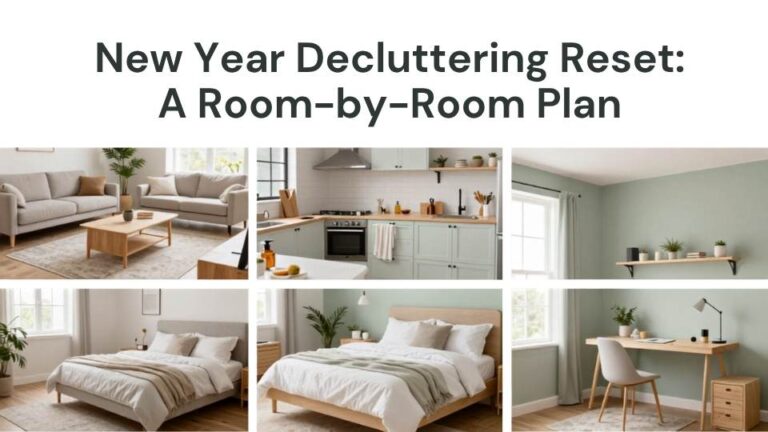
If you’re not sure where to start, work through rooms in this order. Each one gets easier and faster as you build the habit:
- Bathroom — small space, mostly expired or unused products, fast wins
- Kitchen — expired food, duplicate gadgets, mismatched containers
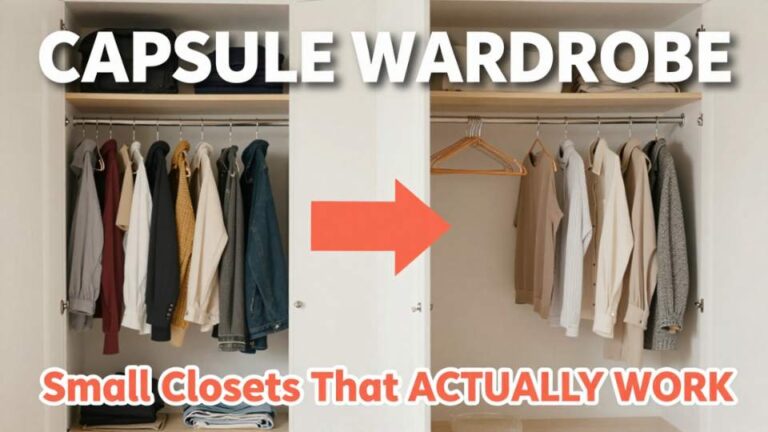
- Closets — clothes you don’t wear, shoes that don’t fit, old bags
- Bedroom — nightstands, dressers, under-bed storage
- Living room — old magazines, cords, decor that’s lost its purpose
- Home office or paperwork — old bills, expired documents, dead pens
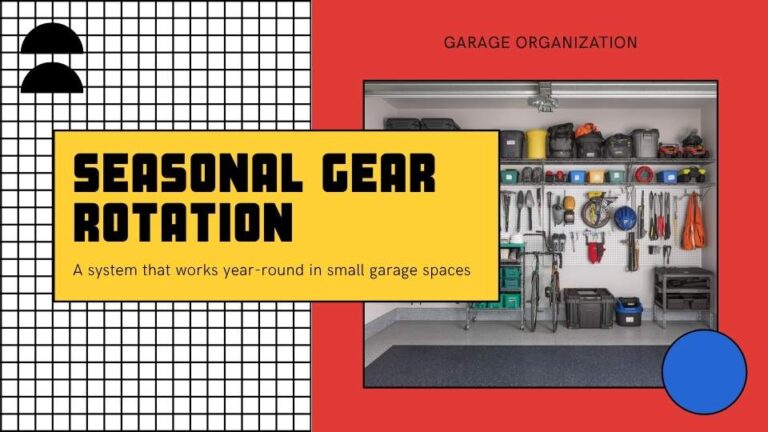
- Garage or storage areas — save for last since these usually take the longest
Comparison Table: Decluttering Methods and Who They Fit
| Method | Best For | Time Needed | Trade-Off |
|---|---|---|---|
| Four-box method | Any room, general declutter | 15-25 min per zone | Simple to follow, but needs a clear next step for donate items |
| 90/90 rule | Clothes, kitchen tools, hobby gear | A few minutes per item | Fast and objective, but doesn’t work well for seasonal or rarely used items |
| Testing box | Sentimental or uncertain items | 60-90 days to resolve | Removes decision pressure, but requires storage space and follow-through |
| One-room-at-a-time | People with a full weekend to give | Half a day to a full day | Thorough, but risks burnout if the room is very cluttered |
| Zone timer method | Busy schedules, small daily sessions | 15 minutes a day | Builds a habit slowly, but takes longer to see whole-house results |
Keeping It From Coming Back
Decluttering once is only half the job. To keep clutter from creeping back in, build in a simple maintenance habit:
- One in, one out. When something new comes into the house, something similar leaves.
- A weekly five-minute reset. Walk through the house and return anything that’s landed in the wrong spot.
- A seasonal check-in. Twice a year, revisit closets and storage areas for anything that’s snuck back in.
None of these require a big time commitment. They just need to happen regularly, which is what actually keeps a decluttered home decluttered.